Your First Safari: Everything You Need to Know
If you're planning your first African safari, you're probably excited, slightly nervous and wondering whether you've forgotten something important. The good news is that almost every first-time traveller feels exactly the same.
This guide walks you through what to expect before you leave home, from airports and luggage to your first game drive and your last evening around the campfire. By the time you've finished reading, you'll know exactly what lies ahead, allowing you to focus on the excitement rather than the unknown.

What Happens When You Arrive in Africa?
Stepping off the plane in Africa is an exciting moment. After months of planning, you're finally here. While every airport is a little different, the arrival process is generally straightforward, and before long you'll be on your way to your first safari adventure.
After leaving the aircraft, you'll make your way through immigration, where your passport and any required travel documents will be checked. Once you've collected your luggage and cleared customs, you'll head into the arrivals hall, where you'll usually be greeted by your guide or a friendly representative holding a sign with your name on it. If you've booked your safari through Girl in the Wilderness, you won't be left wondering where to go next. Every transfer has been arranged in advance, so all you need to do is look forward to the journey ahead.
Depending on your itinerary, you may continue to a domestic flight, enjoy a scenic road transfer or spend your first night in a nearby hotel before travelling into the bush the following day. Either way, this is when the excitement really starts to build. The city gradually gives way to open landscapes, villages become smaller and, before you know it, you'll find yourself scanning every tree and termite mound, convinced you've already spotted your first giraffe.
One piece of advice I always give first-time travellers is to relax and let Africa set the pace. Things may not always happen with military precision, but they almost always happen with a smile. From the moment you arrive, you'll discover that one of Africa's greatest strengths is its warmth and hospitality.
By the time you reach your lodge, settle into your room and hear the first call of a fish eagle or the distant whoop of a hyena, you'll realise something rather wonderful. You're no longer planning your safari.
You're living it.
Read our journal entry : 17 Stages of Your First African Safari - A Relatable Guide
What Luggage Should You Take on Safari?
One of the easiest ways to make your safari more enjoyable is to pack the right luggage before you leave home. While it's tempting to reach for a large hard-shell suitcase, it's not always the best choice for travelling around Africa.
Many safari itineraries include light aircraft flights or smaller transfer vehicles where luggage space is limited. For this reason, a soft-sided duffel bag is almost always recommended. These bags are easier to load into aircraft and vehicles, and they're far kinder to both the people handling them and the limited storage space available.
Try to pack only what you really need. Most safari lodges offer laundry services, which means you can comfortably travel with fewer clothes than you might expect. A lighter bag is not only easier to manage through airports and transfers, but it also leaves a little extra space for the souvenirs you'll almost certainly bring home.
Keep your passport, travel documents, medications, valuables, camera equipment and a change of clothes in your carry-on luggage, just in case your checked bag takes a little longer to catch up with you. It's rare, but being prepared gives you one less thing to worry about.
If you're travelling with photography equipment, make sure your cameras, lenses, batteries and memory cards stay with you in your cabin baggage wherever possible. Camera gear is both valuable and delicate, and you'll be much happier knowing it's safely by your side.
The good news is that you don't need to pack for every possible scenario. Comfortable, practical clothing and the right luggage will take you much further than an overflowing suitcase. When in doubt, pack a little less than you think you'll need. You'll appreciate it every time you move between destinations.
Antje's Tip: Leave a little room in your bag. Somehow Africa has a habit of sending everyone home with more curios, books and memories than they planned for.
Write tag here

If you're picturing yourself shopping for an entirely new safari wardrobe before your trip, let me save you both the effort and the expense. The truth is, you probably already own most of what you'll need.
Comfort is far more important than fashion on safari. Lightweight, breathable clothing in neutral colours like olive, green, beige, brown or grey works well, helping you stay cool while blending into the natural environment. Bright colours and bold patterns won't ruin your safari, but they can be distracting, particularly on walking safaris where it's best to keep a lower profile.
The key to dressing for safari is layering. Early morning game drives can be surprisingly chilly, even in Africa, while the afternoons often warm up quickly. A light fleece or jacket for the morning, paired with clothing you can easily remove as the day heats up, is usually all you need.
Comfortable walking shoes are useful around camp and for the occasional bush walk, while a wide-brimmed hat, sunglasses and sunscreen will quickly become your best friends under the African sun. Most evenings are wonderfully relaxed, so there's no need to pack formal clothes unless your itinerary specifically calls for them.
One of the biggest misconceptions about safari is that you need to dress like a professional explorer. You don't. Nobody is judging your outfit, and the elephants certainly aren't discussing whether your shirt is the correct shade of olive. Wear clothes that are comfortable, practical and make you feel like yourself.
At the end of the day, safari isn't about looking the part. It's about being present enough to enjoy every extraordinary moment.
What Should You Wear on Safari?
What Is Your First Game Drive Like?
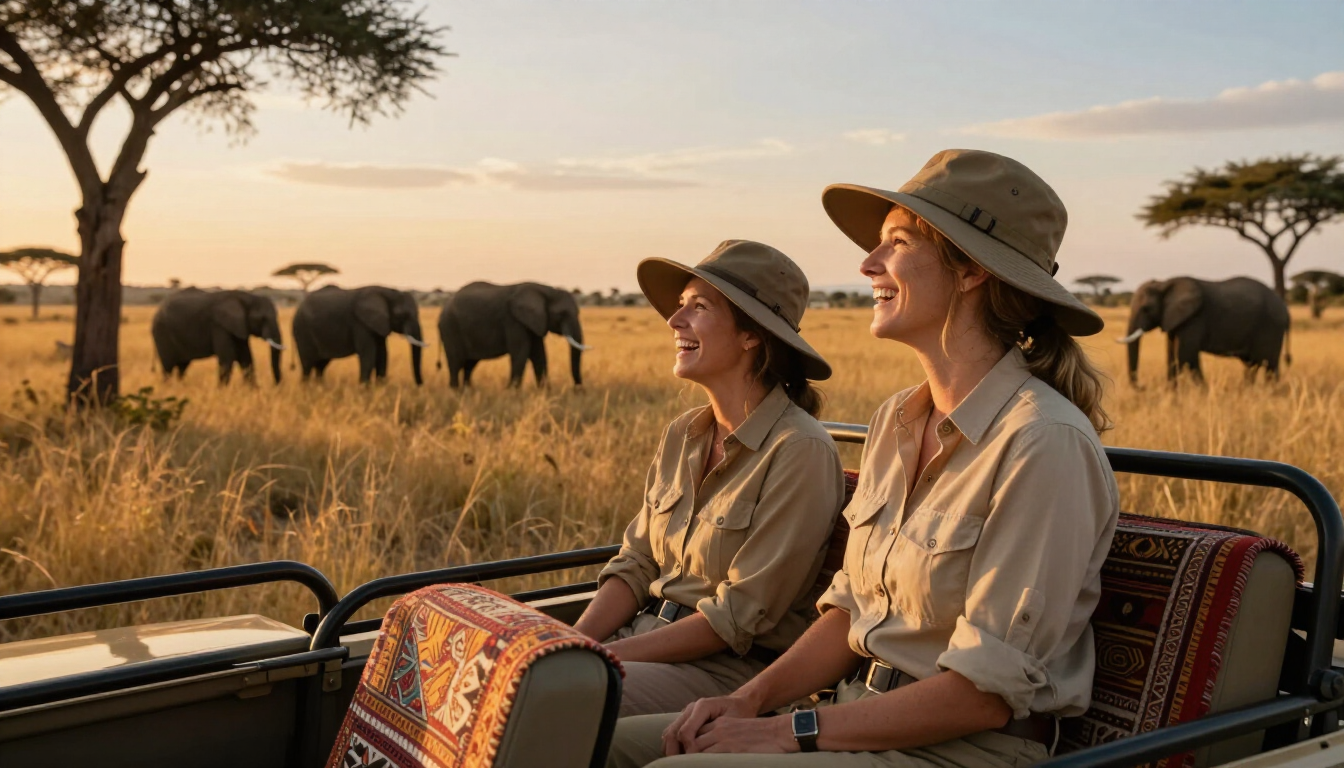
Your first game drive is one of those experiences you'll probably remember for the rest of your life. Not because you'll necessarily see a lion in the first five minutes, but because everything is new. Every bird catches your eye, every rustle in the grass makes your heart race and every bend in the road feels like it could reveal something extraordinary.
Before you set off, your guide will introduce you to the vehicle and explain a few simple safety rules. Once you're out in the bush, you'll quickly realise that safari isn't about racing from one famous animal to the next. It's about slowing down, observing and learning to notice the details that make Africa so fascinating.
One of the biggest surprises for first-time travellers is just how much there is to discover. Of course everyone hopes to see lions, elephants and leopards, but you'll soon find yourself becoming just as excited by giraffes browsing in the treetops, a family of warthogs trotting through the grass or a lilac-breasted roller flashing brilliant colours as it flies past.
Don't worry if you don't spot every animal straight away. That's what your guide is there for. Years of experience have taught them how to read tracks, listen for alarm calls and notice the tiny clues that most of us would drive straight past. Before long, you'll be amazed at what they can find, and even more amazed when you start spotting wildlife for yourself.
Most game drives include a stop somewhere scenic for coffee in the morning or sundowners in the afternoon. These quiet moments often become guests' favourite memories, giving you time to soak up the landscape, chat about the sightings and simply appreciate being in one of the most remarkable places on Earth.
If I could give one piece of advice for your first game drive, it would be this: don't spend the entire time looking through your camera or chasing a checklist of animals. Put the camera down every now and then, take a deep breath and simply be present. The photographs will help you remember your safari, but it's those moments when you're completely immersed in the sights, sounds and smells of Africa that you'll carry with you forever.
Will I Have Phone Signal and Wi-Fi on Safari?
One of the questions I hear surprisingly often is whether you'll be completely cut off from the outside world. The answer is... it depends on where you're travelling.
Many safari lodges now offer Wi-Fi in the main lodge areas and, in some cases, even in your room. Mobile phone signal is also available in many parts of Africa, although coverage naturally becomes less reliable the further you venture into remote wilderness areas.
If staying connected is important, it's worth checking with your safari planner before you travel. They'll be able to advise you on what to expect at each lodge and whether you'll need a local SIM card or an international roaming package.
That said, don't be surprised if you find yourself reaching for your phone less than you expected. There's something wonderfully liberating about swapping endless notifications for birdsong, watching elephants at a waterhole instead of scrolling through social media, or ending the day around a campfire rather than in front of a screen.
Most guests discover that a few days away from constant emails and notifications is exactly what they didn't realise they needed. And the best part? The messages will still be there when you get home, but your chance to watch a leopard disappear silently into the African bush only happens once.
Write tag here
The truth is that there will probably never be a perfect time.
The women I meet who have the most extraordinary experiences are rarely the ones who had everything perfectly planned. They're the ones who decided that waiting wasn't serving them anymore.
If you love nature, enjoy learning, appreciate meaningful travel and are open to a little uncertainty in exchange for unforgettable moments, I have a feeling you'll discover what so many women tell me at the end of their very first safari.
"I only wish I'd done it sooner."

What Is Safari Food Like?
If you're expecting tins of baked beans cooked over an open fire, you're in for a very pleasant surprise.
One of the things that first-time safari travellers comment on most is just how good the food is. Whether you're staying in a small tented camp or a luxury safari lodge, meals are often a highlight of the day. Fresh ingredients, talented chefs and warm African hospitality come together to create dining experiences that are every bit as memorable as the wildlife.
A typical safari day usually begins with tea, coffee and a light snack before your morning game drive. After returning to camp, you'll enjoy a leisurely breakfast before spending the middle of the day relaxing. Lunch is often fresh and informal, while dinner is a chance to gather with your fellow travellers and share stories from the day's adventures over beautifully prepared food.
One of my favourite safari traditions is sundowners. As the sun begins to set, your guide will find a safe spot to stop the vehicle, where you can enjoy a drink and a few snacks while watching the African sky transform into shades of gold, orange and pink. It's a simple tradition, but one that somehow becomes one of the moments guests remember long after they've returned home.
Most lodges are also exceptionally accommodating when it comes to dietary requirements. Vegetarian, vegan, gluten-free and other special diets can almost always be catered for, provided they're arranged before your arrival.
You certainly won't go hungry on safari. In fact, many guests leave wondering how they managed to eat so well while surrounded by some of the wildest landscapes on Earth.
Safari Etiquette: Do's and Don'ts
One of the wonderful things about safari is that there are very few rules to remember. Most come down to common sense, respect for wildlife and consideration for the people sharing the experience with you.
Listen to your guide. They're not just there to find animals. They understand wildlife behaviour, know how to keep everyone safe and will help you get the most from every sighting.
Keep your voice low. The quieter the vehicle, the more you'll hear and the less likely you are to disturb the animals. Besides, there's something rather magical about sitting in comfortable silence while a herd of elephants wanders past.
Stay seated unless your guide says otherwise. Standing up unexpectedly can alarm wildlife, particularly when you're close to animals. Your guide will always let you know when it's safe to move around.
Be patient. Safari isn't a race to tick animals off a list. Sometimes the most rewarding sightings happen because everyone was willing to wait a little longer.
Respect nature. Never feed wildlife, leave litter behind or encourage an animal to come closer for a photograph. The best encounters are always on nature's terms.
Share the experience. Whether you're travelling with friends or meeting new people for the first time, remember that everyone has come to enjoy the same incredible moments.
A little kindness, patience and consideration go a long way.
And finally, one piece of advice I give every first-time traveller: don't spend your entire safari behind a camera. Take the photographs, absolutely, but remember to put the camera down every now and then. Some of the most memorable moments in Africa are the ones you'll never capture in a picture.